
The Ancient Native American Tale of the Crow
- Dec 22, 2025
- 2 min read
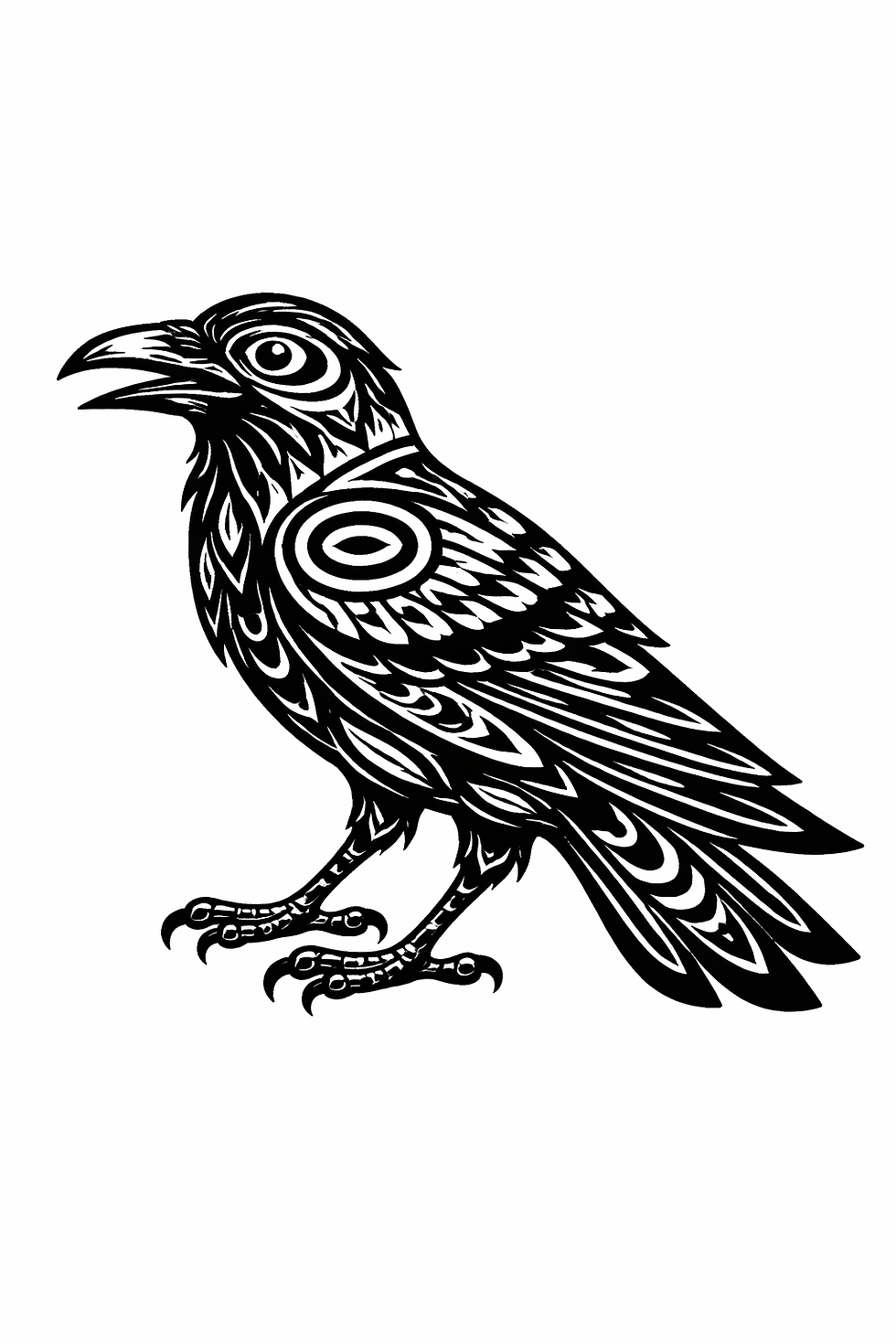
Across many Native American cultures, the Crow appears as one of the most powerful and complex figures in traditional storytelling. Sometimes a creator, sometimes a trickster, and sometimes a teacher, the crow is never a simple character. Instead, these ancient tales use the crow to explain how the world came to be—and to remind people of the consequences of curiosity, intelligence, and ambition.
The World Before Light
In many versions of the tale, the world once existed in darkness. There was land, water, animals, and people, but no sun, moon, or stars. Light was kept hidden away by a powerful being—often an old chief or spirit—who guarded it jealously. The people lived in shadow, struggling to survive without warmth or sight.
The crow, clever and observant, saw the suffering of the world and decided that something had to change.
The Crow’s Cunning Plan
Rather than using strength, the crow relied on intelligence and deception. Disguising itself—sometimes as a leaf, sometimes as a child, sometimes as something small and harmless—the crow gained access to the place where the light was hidden.
Through patience and careful timing, the crow stole the sun, the moon, and the stars. As it fled into the sky, it released them one by one, bringing light to the world for the first time. The sun warmed the earth, the moon softened the night, and the stars guided people in darkness.
The Price of Wisdom
But the story does not end in triumph alone. In many versions, the crow was once white or brightly coloured. During its escape, it flew too close to smoke, fire, or darkness, and its feathers were burned black. From that moment on, the crow remained dark in colour—a reminder that even noble actions can come with consequences.
This transformation explains not only the crow’s appearance but also its role in the world: wise, watchful, and marked by experience.
Meaning and Lessons of the Tale
The ancient tale of the crow carries several enduring lessons:
Intelligence is more powerful than force
Curiosity can change the world—but not without risk
Even heroes are imperfect
Knowledge often comes with responsibility and sacrifice
Rather than presenting the crow as purely good or evil, Native American storytelling embraces complexity. The crow reflects humanity itself—capable of creation, mistake, generosity, and self-interest all at once.
The Crow’s Enduring Symbolism
Today, the crow remains a powerful symbol in Native American culture, representing:
Transformation and change
Wisdom earned through experience
The balance between light and darkness
These stories were traditionally passed down orally, generation by generation, not just as entertainment, but as a way to teach values, history, and respect for the natural world.
A Story That Still Speaks
The ancient tale of the crow continues to resonate because it speaks to universal truths. Progress often requires courage and cleverness. Growth can come at a cost. And even in darkness, one determined spirit can bring light to the world.
In remembering the crow, we are reminded that wisdom is not about perfection—but about learning, adapting, and understanding the consequences of our actions.


Comments