
Crows in Norse Mythology
- Dec 22, 2025
- 2 min read
Symbols of Wisdom, Fate, and the All-Seeing Mind
Crows in Norse mythology are central, few creatures carry as much symbolic weight as the crow and its close corvid relatives. Far from being mere birds, crows represent thought, memory, fate, war, and divine knowledge. To the Norse worldview, the crow was a creature that moved freely between worlds—watching, listening, and remembering.
At the centre of this symbolism stands Odin, the Allfather, whose connection to crows and ravens shaped how these birds were understood across Viking-age Scandinavia.
Odin and the Watching Birds
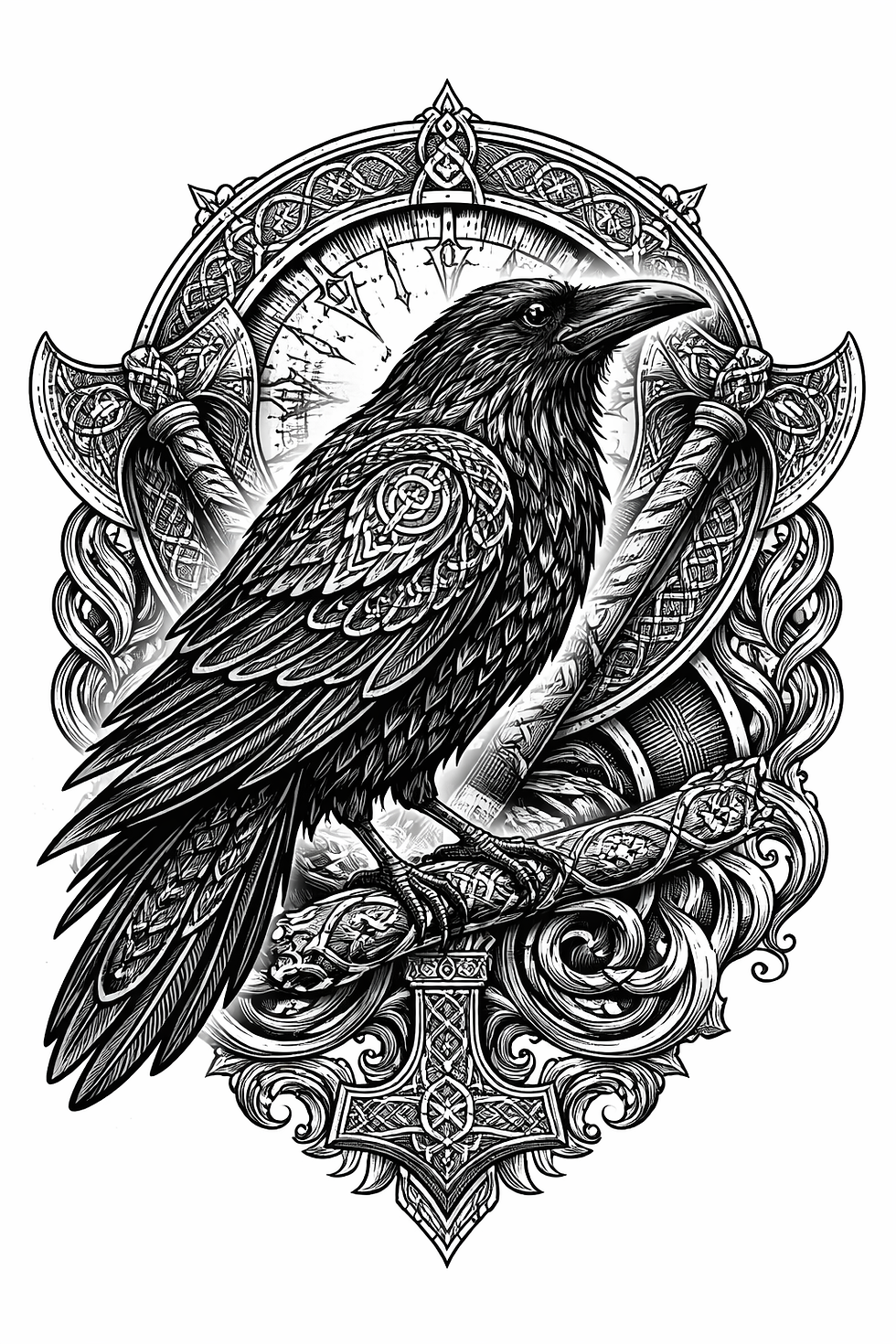
Odin is almost never depicted alone. Perched on his shoulders are two birds—often described as ravens, but closely associated with crow symbolism as well—named Huginn (Thought) and Muninn (Memory).
Each day, the birds fly across the Nine Worlds, observing everything that happens among gods and mortals alike. At night, they return to Odin and whisper what they have seen into his ears.
This makes crows symbols of:
Intelligence and awareness
Observation without interference
Knowledge gathered quietly
Truth revealed through patience
Odin’s fear that Muninn might not return reflects a deep Norse belief: memory is fragile, and wisdom is never guaranteed.
Crows as Creatures of Fate
In Norse culture, crows were often associated with fate and inevitability. Their presence on battlefields—where they fed on the fallen—linked them directly to death, but not in a purely negative sense.
To the Norse mind, death was not an ending but a transition.
Seeing crows circling overhead could be interpreted as:
Fate unfolding as it must
The presence of the gods
A moment of reckoning or transformation
Rather than symbols of doom, crows were seen as neutral witnesses to destiny.
War, Battle, and the Afterlife
Crows and ravens were strongly associated with warfare. They followed armies, appeared in battlefield poetry, and became emblems of warriors and kings.
This connection had several meanings:
Victory and loss were both worthy of remembrance
The dead were honoured, not feared
The gods were watching the outcome
Some Viking banners even bore raven symbols, believing the bird would guide them toward victory—or at least ensure their deeds were remembered.
Wisdom Bought at a Price
Odin himself sacrificed greatly for knowledge—an eye for wisdom, suffering for runes—and his bond with the birds reflects this theme.
Crows in Norse mythology remind us that:
Knowledge requires sacrifice
Seeing everything can be a burden
Awareness carries responsibility
They are not comforting symbols. They are honest ones.
Between Worlds: Messengers of the Unseen
Crows were believed to move freely between:
The realm of the gods
The world of humans
The lands of the dead
This liminal role made them ideal messengers—creatures that could cross boundaries others could not. In this way, crows embodied the Norse acceptance of uncertainty, change, and impermanence.
A Symbol That Endures
Today, crows remain powerful symbols precisely because of these ancient associations. When people feel watched, guided, or challenged by the presence of a crow, they are echoing a belief that stretches back more than a thousand years.
In Norse mythology, the crow is not an omen to fear—but a reminder:
Pay attention. Remember what you see. Wisdom is always watching.


Comments